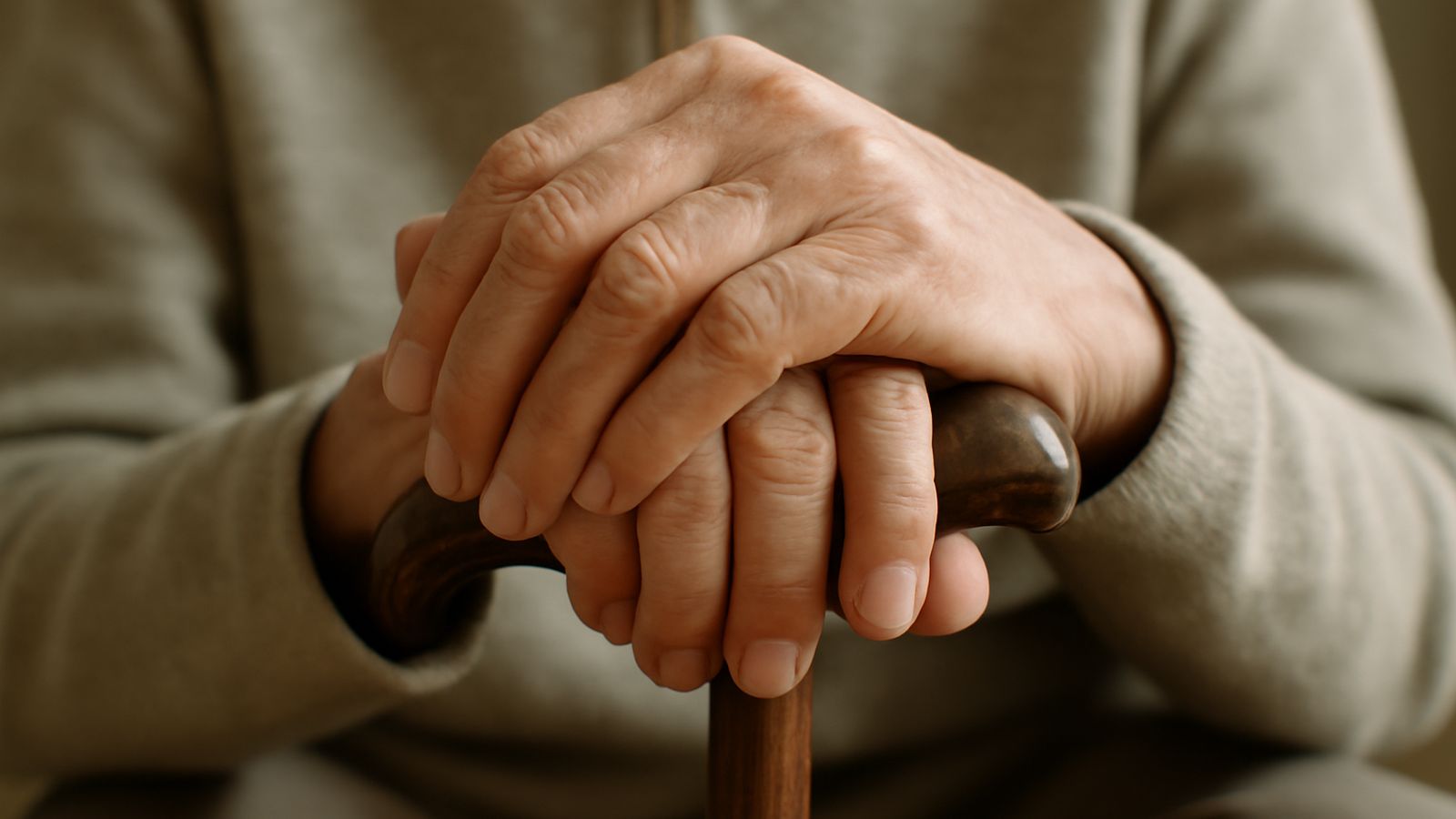
Elder abuse is harm caused to an older person by someone in a position of trust or responsibility, most often a family member. It covers physical harm, emotional and psychological abuse, financial exploitation, and neglect by a carer, along with self-neglect where an older person is no longer able to look after themselves safely.
If someone is in immediate danger, call the police on 999. The National Anti-Violence and Sexual Harassment Helpline is 1800 777 0000 and is available around the clock for advice and support.
Most elder abuse is not a single dramatic incident. It is a pattern that builds slowly inside a family, and the person experiencing it is often dependent on, and protective of, the person causing the harm. This article covers the forms it takes, the legal routes available, and what a concerned relative, neighbour or professional can realistically do.
The forms elder abuse takes
Physical abuse
Hitting, pushing, rough handling during care, inappropriate restraint, and the misuse of medication, whether over-sedating someone to make them easier to manage, or withholding medication they need. Physical abuse in an older person can be harder to identify because falls and fragile skin provide a ready explanation for injuries.
Emotional and psychological abuse
Shouting, threats, humiliation, and the constant belittling that erodes a person’s confidence in their own judgement. It also includes the threats specific to old age: threatening to put someone in a home, to stop visiting, to withhold contact with grandchildren, or to leave them alone. Isolation is a common feature, cutting the person off from friends, relatives or activities, which increases dependence and reduces the chance of anyone noticing.
Financial abuse
This is the most common form and the most easily hidden. It ranges from small persistent withdrawals to the wholesale transfer of a person’s assets, and it includes:
- Taking money, cards or valuables, or using an ATM card handed over for one purpose to make withdrawals for another.
- Pressuring someone to change a will, to add a name to a bank account, or to transfer property.
- Moving in and living off the older person’s savings, or refusing to pay agreed rent or expenses.
- Misusing authority under a Lasting Power of Attorney or a deputyship order.
- Scams and cold-call fraud from outside the family, which older people are disproportionately targeted by.
Financial abuse often shades into something that looks like ordinary family life: a son who manages his mother’s accounts “to help”, a daughter who lives rent-free “because she cares for him”. The line is whether the arrangement genuinely serves the older person or the person handling the money.
Neglect
A failure by someone responsible for care to provide what the person needs: food, fluids, clean clothing, help with washing and toileting, medical attention, or a safe living environment. Neglect can be deliberate, or it can result from a carer who is overwhelmed, unwell, or simply unable to cope. The effect on the older person is the same and needs the same response, but the intervention that helps is very different: a carer at breaking point needs support, not punishment.
Self-neglect
An older person living alone may stop eating properly, stop taking medication, stop managing bills, or let their home become unsafe. No one else is causing it, but the risk is real and it is treated as a welfare concern. Self-neglect frequently signals an underlying problem: dementia, depression, bereavement, or a physical decline that has not been assessed.
Who the person causing harm usually is
In most cases it is someone close: an adult child, a spouse, a sibling, or a live-in carer whether family or hired. Long-standing family dynamics, a caregiver’s own financial dependence, substance misuse and untreated mental illness all feature.
A distinct category is the person holding formal legal authority. A donee under a Lasting Power of Attorney, or a deputy appointed by the court, has real control over an older person’s money and welfare, and that control is exercisable precisely when the person is least able to object. Where authority is being misused, the position is set out in the guide to what to do when a donee or deputy abuses their position.
Warning signs
Any one of these can have an innocent explanation. A cluster of them, or a change from how things were, deserves attention.
| Category | What to look for |
|---|---|
| Physical | Unexplained bruising, especially in unusual places; injuries that do not match the explanation given; a reluctance to be undressed for examination; over-sedation; repeated hospital visits with vague accounts |
| Emotional | Withdrawal, fearfulness or flinching around one particular person; a marked change in mood; someone who always answers for them; loss of contact with friends and activities |
| Financial | Unexplained withdrawals or transfers; a new name on an account or a title; sudden changes to a will; unpaid bills despite adequate income; missing valuables; a relative with unexplained new spending |
| Neglect | Weight loss, dehydration, pressure sores, poor hygiene, unwashed clothing, missed medical appointments, unsafe or unheated living conditions, no food in the home |
| Situational | A carer who will not leave you alone with the person; a person who is never available when you visit; refusal to allow health or social services in |
The single strongest signal is a change in access: when it becomes progressively harder for anyone outside the household to see or speak to the person alone.
The legal routes available
The Vulnerable Adults Act
This Act is designed for the situation where an adult is unable to protect themselves from abuse, neglect or self-neglect because of mental or physical infirmity, disability or incapacity. It gives designated officers powers to assess the person, to enter premises where necessary, and in serious cases to remove the person to a place of safety. The court can also make orders restraining a person from contacting or visiting.
The Act deliberately sets a threshold. It is not for every difficult family situation; it is for the person who cannot act for themselves. Where an older person has capacity and can act, the Act’s protective powers are generally not the answer, and the ordinary routes below apply. The scope and the process are covered in the guide to the Vulnerable Adults Act.
A Personal Protection Order
Where the person causing harm is a family member as the Women’s Charter defines that term, whether a spouse or former spouse, a child, a parent, a parent-in-law, a sibling, or certain other relatives, a Personal Protection Order is available. Family violence under the Charter covers causing hurt, wrongful confinement or restraint, placing a person in fear of hurt, and continual harassment causing anguish. An order can be supplemented by a domestic exclusion order removing the person from a shared home, and an expedited order is available where there is imminent danger.
An application can be made by the older person, and in defined circumstances by another person on their behalf. The process is set out in the guide to applying for a Personal Protection Order, with the wider framework in the guide to family violence in Singapore.
Protection under POHA
Where the person causing harm is not a family member under the Women’s Charter, such as a hired carer, a neighbour, a tenant, a friend or someone met online, the Protection from Harassment Act is generally the route. It provides protection orders and expedited protection orders against harassment, unlawful stalking, threatening or abusive behaviour and abusive communication, without any family relationship being required. The process is covered in the guide to protection orders under POHA.
Maintenance of parents
Where the core problem is that a child who can afford to support a parent is not doing so, the Maintenance of Parents regime provides a specific remedy. A parent aged 60 or above who is unable to maintain themselves adequately may apply to the Tribunal for the Maintenance of Parents for an order against a child able to support them, and the process is designed to be accessible without a lawyer, with conciliation attempted first. The route is set out in the guide to maintenance of parents in Singapore.
Where a donee or deputy is the problem
The Office of the Public Guardian, under the Ministry of Social and Family Development, supervises donees under Lasting Powers of Attorney and court-appointed deputies. A concern can be raised with the OPG, which has investigative powers, and the court has power to revoke an LPA or a deputyship order and to appoint someone else. Where money has gone, act quickly, because the practical prospects of recovery fall away as time passes and accounts are emptied. The OPG’s role is described in the guide to the Office of the Public Guardian.
Criminal offences may also be in play, such as theft, criminal breach of trust, cheating, causing hurt and wrongful confinement, and a police report is a separate step from any civil or protective application.
When the older person refuses help
This is the hardest part of elder abuse work, and it needs stating plainly. An adult with mental capacity has the right to make decisions others regard as unwise, including staying in a harmful household, continuing to give money to a child who exploits them, and declining every offer of help.
People refuse for understandable reasons. They love the person harming them. They are ashamed. They fear being placed in a home or losing contact with grandchildren. They may not describe what is happening as abuse at all. Capacity is also decision-specific and can fluctuate: someone may be able to decide where they live but not to manage a property transfer, and a diagnosis does not by itself remove the right to decide.
What helps in practice is staying in the relationship rather than forcing an outcome. Keep visiting. Keep the person connected to someone outside the household. Do not issue ultimatums that end contact, because contact is the protective factor. Say clearly and without pressure that you are worried, that it is not their fault, and that you will help whenever they want it. Many people accept help eventually, and they accept it from someone who stayed.
Reporting a concern and what you can do
If there is immediate danger, call 999. Where there is no emergency but you are worried, concerns about an adult at risk can be raised with the Ministry of Social and Family Development, and 1800 777 0000 is available for advice on violence situations. You do not need to be certain, and you do not need to have evidence; you need a genuine concern.
Beyond reporting, the useful things are ordinary:
- Get time alone with the person. Almost nothing can be assessed while the person of concern is in the room.
- Write things down. Dates, what you saw, what was said, in whose words. Contemporaneous notes carry far more weight later than a recollection.
- Ask open questions and accept the answer without pressing. “How are things at home?” gets further than “Is he hitting you?”
- Involve the doctor. A GP or hospital team can assess capacity, document injuries and open a route to social work support.
- Support the carer where the problem is strain rather than malice. Respite, help with tasks and a realistic conversation about the load can resolve neglect that no legal order would fix.
- Preserve financial records if money is the issue, keeping statements, transfers and correspondence, before anyone has a reason to remove them.
The guide to helping someone in an abusive relationship covers the conversational side in more depth, and most of it applies directly here.
Prevention is worth a word too. An older person who has made a Lasting Power of Attorney while well, appointing someone they trust and putting in place a second donee or a requirement that donees act jointly, is considerably harder to exploit than one who has made no arrangements at all. If you want advice on your own situation, we can connect you with a licensed Singapore law practice.