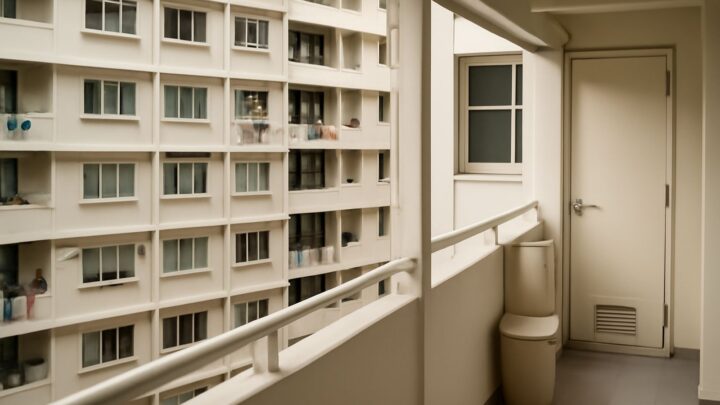
If you are leaving the matrimonial home, or the flat is going to be sold and neither of you can stay, you need somewhere to live long before the court decides who gets what. The realistic options are the private rental market, renting a room or a whole flat from an HDB owner, or, for those in genuine need, the public rental scheme. Each has different requirements, and the timing rarely lines up neatly with the divorce.
The uncomfortable part is that the matrimonial home is usually one of the last things resolved. You may be renting for a long stretch while the property question sits unanswered. Planning for that, rather than for a quick resolution, is the single most useful thing you can do.
The timing problem
The matrimonial home is normally dealt with at the ancillary matters stage, which comes after the interim judgment. Until then, ownership does not change, the mortgage keeps running, and both spouses generally retain a right to occupy. Nobody is required to leave because papers were filed.
How long that takes varies enormously. An uncontested matter with an agreed division moves reasonably quickly. A contested one, with disputed valuations, disclosure fights and a full hearing, does not; the guide to the ancillary matters hearing sets out what has to happen before a judge deals with the property. Then, if a sale is ordered, the sale itself takes further months, and an HDB flat carries its own eligibility and timing rules on top.
Two consequences for housing. First, do not sign a tenancy on the assumption that you will be back in a home of your own within a year; build in flexibility on the lease term where you can. Second, be honest with yourself about affordability across the whole period, not just the first few months while savings are cushioning things.
The private rental market
Private rental is the fastest route because it does not depend on the divorce being finished. It is also the most expensive, and landlords ask questions that are awkward mid-divorce.
What landlords and agents typically want to see:
- Evidence of income: payslips, employment letter, or tax documents. This is the sticking point for anyone who has been out of the workforce or was supported by a spouse.
- A deposit, usually expressed as a number of months’ rent, plus rent in advance. That is cash you have to find upfront while other funds may be tied up in the marriage.
- Agent fees, depending on the arrangement and the length of the lease.
- Identity and status documents, which for non-citizens means a valid pass, an issue in its own right for those whose immigration status was linked to the marriage.
- A minimum lease term, which limits your flexibility if circumstances change.
Figures move constantly and vary by location and property type, so do not budget from anything you read second-hand; get current quotes for the areas you would actually live in. If income evidence is your obstacle, options include a shorter lease, a co-tenancy with someone whose income qualifies, or a guarantor, though each has its own complications and a guarantor arrangement should not be entered into casually.
One practical point specific to divorce: if you are renting because you were financially dependent, say so early to your lawyer. The cost of housing yourself is exactly the kind of need that interim maintenance exists to address, and it is far easier to raise at the outset than to reconstruct after you have already been paying for six months out of savings.
HDB rental options
Public housing offers several distinct routes, and people frequently confuse them.
Renting a room from a flat owner
Flat owners may rent out bedrooms subject to HDB’s rules on eligibility, occupancy limits and the length of the letting. This is generally the cheapest formal option and the most flexible, which makes it common as an immediate bridge, particularly for a parent who needs to stay near the children’s school while everything else is unresolved. The obvious limitation is that you are sharing someone else’s home, which constrains overnight access arrangements with children.
Renting a whole flat from an owner
Owners may also rent out an entire flat, again subject to HDB’s approval and rules. It costs more than a room and less than comparable private property, and it gives you a self-contained home where children can stay. Eligibility to rent, and the owner’s eligibility to rent out, are both governed by HDB requirements, so check the current position with HDB rather than relying on the agent’s summary.
The public rental scheme
HDB also runs a public rental scheme for households with genuine need and no other housing option, with heavily subsidised rents. Eligibility is assessed against criteria including income, citizenship, family nucleus and whether other housing options exist, including property you have owned or disposed of. Applications are assessed case by case, and it is not an automatic entitlement for anyone going through a divorce.
If you think you may qualify, approach HDB directly and early, and be prepared for the process to take time and to require documentation about the divorce and your finances. Do not treat it as a fallback you can activate at short notice.
Should you move out at all?
Some people should leave immediately: where there is violence or a real risk to safety, housing questions come second to getting out, and there are protective orders available. For everyone else, it is a decision with legal texture, and the guide to moving out during a divorce covers it properly.
The short version: moving out does not forfeit your ownership interest in the property, and it is not desertion in the legal sense simply because you left. What it can affect is the practical picture: where the children are settled, who is realistically best placed to retain the home, and what the day-to-day arrangements have looked like by the time a judge sees the file. Those things carry weight even though the beneficial interest does not evaporate.
If you can afford to and it is safe, take advice before you move rather than after. The advice is usually cheap and the decision is hard to reverse.
Who pays the rent
Three broad scenarios come up.
| Situation | Usual approach |
|---|---|
| You have your own income and moved out by choice | You pay your own rent; it is a factor in the overall financial picture but not usually recoverable from your spouse. |
| You were financially dependent and now need housing | Housing cost is part of the needs case for interim maintenance, and should be raised early with evidence of the actual rent. |
| Your spouse stayed in the home and you are still paying the mortgage | You may be carrying both a mortgage and a rent. Raise it: the court can take double housing costs into account when looking at what is affordable. |
Whichever applies, keep records. Tenancy agreement, receipts, bank transfers. Housing is one of the largest lines in any household budget, and unevidenced assertions about what you are paying carry very little weight when the finances are argued.
Budgeting on one income
Two households cost more than one. That is the arithmetic underneath most post-divorce financial stress, and rent is usually where it bites first. A household that comfortably serviced one mortgage now has to fund a mortgage and a rent, or two rents, out of the same total income.
Practical adjustments that make the biggest difference:
- Set the rent budget from your own income alone, not from your income plus maintenance you hope to receive. Maintenance can be varied and can be late.
- Account for the upfront cash: deposit, advance rent, agent fee, and the cost of furnishing a home from nothing.
- Weigh location against cost honestly. Staying in the same neighbourhood for the children’s school is a real benefit, but not if it makes the rent unsustainable.
- Rebuild a cash buffer before anything else. A tenancy with no reserve behind it is fragile.
The wider reset, meaning separating accounts, rebuilding credit, restructuring insurance and CPF planning, is covered in rebuilding your finances after divorce. Renting is usually the first chapter of that, not a separate problem.
Buying again later
Renting is generally a bridge rather than a destination. Whether and when you can buy again depends on what you owned, what you received under the divorce order, your citizenship status, and HDB’s rules, including any applicable waiting periods and restrictions where a matrimonial flat was retained or disposed of. The guide to HDB eligibility after divorce sets out the shape of it, and HDB should be approached directly for a decision on your own facts.
Where you have children living with you, or you are the parent with care and control, some schemes and priority allocations may be relevant. That is worth checking before you sign a long lease, because the answer can change how long you plan to rent for. And if the divorce order itself will determine your eligibility, for example by requiring a transfer or a sale, the terms of that order are worth getting right the first time. If you want advice on your own situation, we can connect you with a licensed Singapore law practice.