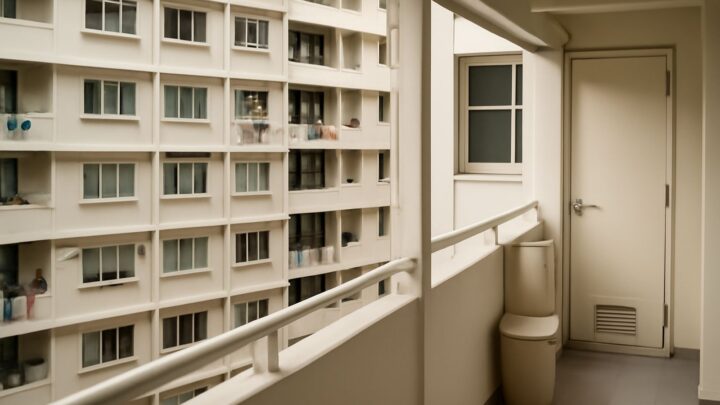
For most divorcing couples in Singapore, the HDB flat is the single largest asset, and the most emotionally loaded one. Someone may want to stay for the children’s schooling; the other may need their share of the equity to start over. What actually happens to the flat depends on three things: HDB’s rules, CPF refund mechanics, and what the Family Justice Courts order as part of the division of matrimonial assets.
This guide walks through the realistic options (selling on the open market, surrendering the flat to HDB, or one spouse taking over the other’s share) and the eligibility and timing rules that shape which options are open to you.
Your Main Options: Sale, Surrender or Transfer
Broadly, a divorcing couple has three routes for the flat:
- Sell on the open market and divide the net proceeds in the proportions the court orders (or that you agree). This is usually only possible if the minimum occupation period has been met.
- Transfer the flat to one spouse (a “buyout”), so that one party becomes the sole owner and the other is paid out for their share, provided the spouse keeping the flat meets HDB’s eligibility rules and can afford to take over the mortgage and refund the other’s CPF.
- Surrender the flat to HDB, typically where the couple cannot sell on the open market and neither spouse is eligible or able to retain it. HDB buys the flat back at a price it determines, which is generally less favourable than an open-market sale.
Which route applies is not purely a matter of choice. HDB’s rules on the minimum occupation period and retention eligibility narrow the menu, and the court’s ancillary orders must work within them.
The Minimum Occupation Period (MOP)
Most HDB flats carry a minimum occupation period, typically five years from key collection (longer for some newer schemes), before the flat can be sold on the open market. Divorce does not waive the MOP.
If your MOP has been met, the full range of options is available: open-market sale, or transfer to an eligible spouse. If the MOP has not been met, you generally cannot sell on the open market. The usual outcomes are then a transfer to one spouse if HDB approves retention, or surrender of the flat to HDB at its prescribed compensation. HDB assesses these situations case by case, so it is worth approaching HDB early to confirm what it will allow before you finalise any agreement or ask the court for orders that HDB cannot implement.
Who Can Keep the Flat: Retention Eligibility
A spouse who wants to retain the flat after divorce must satisfy HDB’s eligibility conditions. In outline, you will usually need to show:
- Citizenship or PR status. The owner after the transfer must be a Singapore citizen or permanent resident.
- A family nucleus. Retaining the flat with children in your care and control, or with a parent, ordinarily satisfies this. This is the most common route for the parent the children live with. If you have children, note that who has care and control is decided as part of the child custody and care arrangements, and the two issues are often negotiated together.
- Or the singles route. A divorced Singapore citizen without a family nucleus can generally retain a flat under the single ownership rules only from age 35, subject to HDB’s conditions for the flat type. A divorcee under 35 without children usually cannot keep the flat alone.
Affordability matters too. The spouse taking over must be able to service or refinance the mortgage and fund the buyout: HDB and the bank will not approve a transfer that the remaining owner plainly cannot afford.
CPF Refunds on Sale or Transfer
Most couples pay for their flat partly with CPF Ordinary Account savings. Those monies do not vanish into the flat: CPF keeps track of every dollar withdrawn, plus the interest it would have earned (accrued interest).
On an open-market sale, the sale proceeds are applied in a set order: the outstanding mortgage is repaid, then each spouse’s CPF withdrawals plus accrued interest are refunded to their own CPF accounts, and only the remaining cash is divided per the court order or agreement. If the sale price is too low to make full CPF refunds after the loan is repaid, the refund is generally limited to what the proceeds allow: you are not usually required to top up the shortfall in cash for a market-price sale.
On a transfer to one spouse, the outgoing spouse’s CPF money plus accrued interest ordinarily has to be refunded into their CPF account as part of the buyout. The court can, in appropriate cases, order a transfer of the flat on terms that vary the usual refund arrangements, subject to the CPF Board’s requirements. The full mechanics (including what happens across the different CPF accounts and how orders are served on the CPF Board) are covered in our guide to how CPF savings are divided on divorce.
When Is the Flat Dealt With? Timing in the Divorce
The flat is usually dealt with at the ancillary matters stage, after the court grants the interim judgment dissolving the marriage, and alongside maintenance and the children’s arrangements. Our guide to the Singapore divorce process explains the sequence. In an uncontested case, the parties record their agreed orders (sale and split of proceeds, or transfer terms) by consent; in a contested case, the judge decides after affidavits and a hearing.
Practically, nothing happens to the flat’s ownership until the ancillary orders are made and then carried out, typically within a deadline set in the order (for example, sale within a stated number of months from the final judgment). Until then, both spouses remain owners, and both remain liable on the mortgage. If you are worried your spouse may try to sell or mortgage the flat unilaterally, speak to a lawyer about protective steps early.
Common Scenarios at a Glance
| Scenario | Likely outcome |
|---|---|
| MOP met; one spouse eligible and can afford to keep the flat | Transfer/buyout: that spouse takes sole ownership, refunds the other’s CPF with accrued interest and pays any cash balance ordered |
| MOP met; neither spouse wants or can afford the flat | Open-market sale; mortgage repaid, CPF refunded, net cash proceeds divided per the order |
| MOP not met; a spouse qualifies to retain (e.g. parent with children) | Transfer subject to HDB’s approval; HDB assesses case by case |
| MOP not met; neither spouse eligible to retain | Surrender to HDB at HDB’s prescribed compensation, usually below market value |
| Divorcee under 35, no children, citizen | Generally cannot retain alone; sale or surrender depending on MOP |
| Parent with care and control of children wants to stay | Often retains under the family nucleus route if affordable; otherwise sale with a larger share of proceeds is a common compromise |
These are patterns, not rules: the court’s task is a just and equitable division on your specific facts, and HDB’s approval is a separate, additional requirement. Before agreeing to anything, confirm with HDB what it will permit, work out the CPF refund figures, and make sure the numbers actually leave each of you housed. A deal that looks fair on paper but cannot be implemented helps no one.